

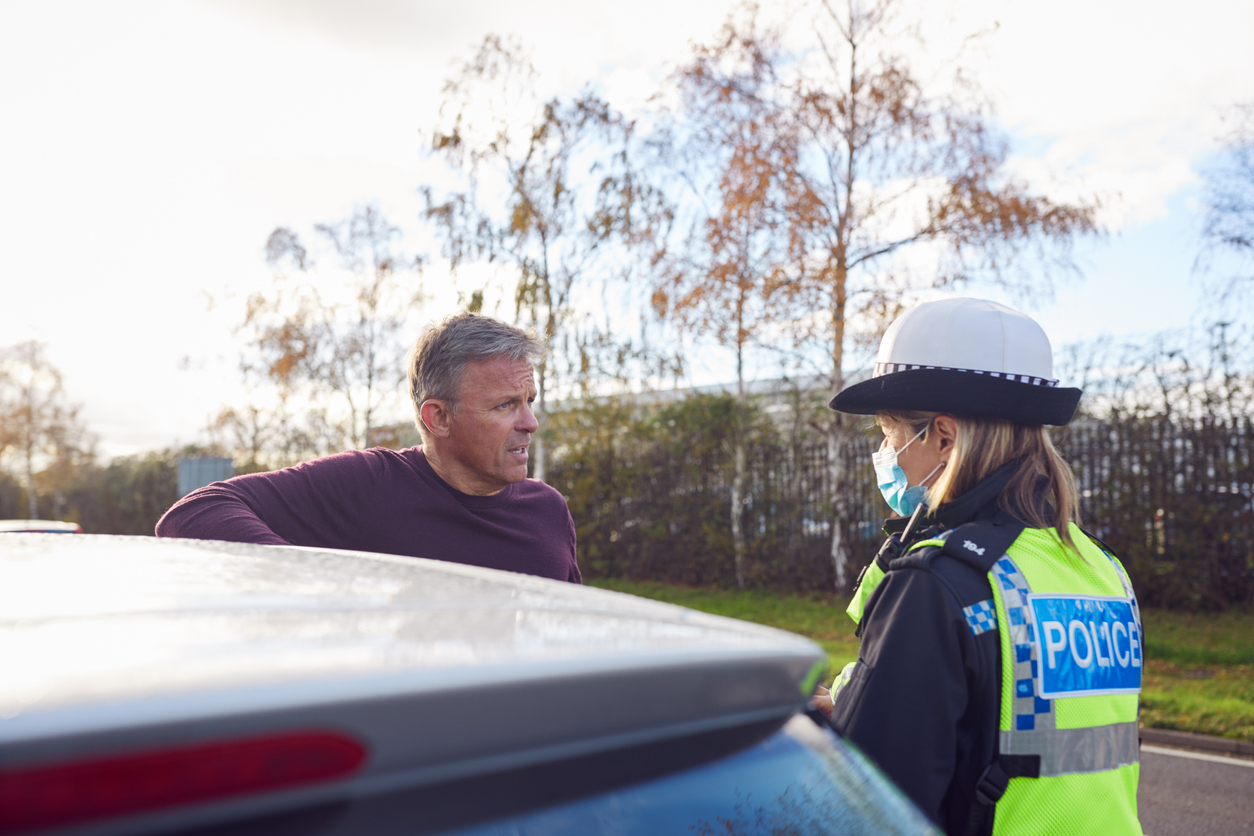
You can refuse to consent to a Border Patrol search of your car at the permanent I-19 immigration checkpoint between Tucson and Nogales, near Amado, but saying no does not always prevent a search. At a checkpoint away from the border or its functional equivalent, Border Patrol generally needs your consent or probable cause to search a private vehicle.
The distinction between a checkpoint stop and a vehicle search matters. Border Patrol has broader authority to briefly stop motorists and ask immigration-related questions at a fixed checkpoint than it does to search their vehicles.
If an I-19 checkpoint encounter results in an arrest or criminal charge, Katsarelis Law Criminal Defense Attorneys can examine what happened before and during the search. Our Tucson criminal defense team has 45 years of combined experience and has handled thousands of criminal cases. Our founding attorney, Eftymios Katsarelis, has an AV-Preeminent rating from Martindale-Hubbell.
What Can Border Patrol Do at an I-19 Immigration Checkpoint Without My Consent?
Border Patrol has the authority to conduct brief immigration inspections at permanent checkpoints. Agents do not need your consent or individualized suspicion simply to stop your vehicle and conduct immigration-related questioning.
Without your consent, agents may:
- Stop your vehicle at a permanent immigration checkpoint
- Ask questions related to your immigration status
- Direct you to a secondary inspection area
- Observe what is in plain view
Being sent to secondary inspection does not automatically authorize agents to search your vehicle.
What Can Give Border Patrol Probable Cause to Search a Vehicle?
Probable cause generally requires facts that provide a reasonable basis to believe a vehicle contains contraband or evidence of a crime. Simply refusing to consent to a search does not, by itself, give agents probable cause.
Depending on the circumstances, probable cause may arise from:
- Contraband or evidence visible to agents
- Statements or information obtained during the encounter
- Other observations made by agents
If probable cause exists, the automobile exception to the Fourth Amendment may permit agents to search without a warrant. The permissible scope of that search depends on what agents have probable cause to believe they will find and where it could reasonably be located.
What Should I Do if Border Patrol Searches My Car After I Say No?
Refusing consent does not mean you should physically interfere if agents proceed with a search.
Instead, you should:
- Clearly state that you do not consent to the search
- Avoid physically resisting or interfering
- Pay attention to what occurs before and during the search
- Remember whether agents used a canine or claimed another basis for searching
- Speak with a criminal defense attorney if the search results in an arrest or criminal charge
If evidence was obtained through an unlawful search, a defense attorney may be able to challenge its use in the criminal case.
FAQ
Can Border Patrol Send Me to Secondary Inspection if I Say No to a Search?
Yes. Border Patrol can refer motorists to secondary inspection at a permanent immigration checkpoint without their consent. However, being sent to secondary inspection does not, by itself, authorize a search of the vehicle.
Can Border Patrol Search a Locked Trunk or Container if I Refuse Consent?
Potentially. If agents have probable cause to search a vehicle, they may search areas and containers that could conceal what they have probable cause to look for. The permissible scope depends on the basis for the search.
Should I Physically Stop Border Patrol From Searching My Car if I Did Not Consent?
No. You can clearly state that you do not consent, but you should not physically interfere with the search. If the search leads to criminal charges, its legality may later be challenged in court.
Contact Katsarelis Law Criminal Defense Attorneys to Schedule a Free Consultation With a Tucson Criminal Defense Attorney
Evidence discovered during an I-19 checkpoint search can lead to serious criminal charges in Tucson, Arizona. However, Border Patrol must still comply with constitutional restrictions governing vehicle searches.
Katsarelis Law Criminal Defense Attorneys has 45 years of combined criminal defense experience and has handled thousands of criminal cases. Our team represents clients facing misdemeanor and felony charges in Tucson and throughout Southern Arizona.
If you were arrested or charged after a Border Patrol vehicle search, call us today to schedule a free consultation with a Tucson criminal defense lawyer.
Katsarelis Law Criminal Defense Attorneys
177 N Church Ave # 900, Tucson, AZ 85701
(520) 510-0439